The result in brief
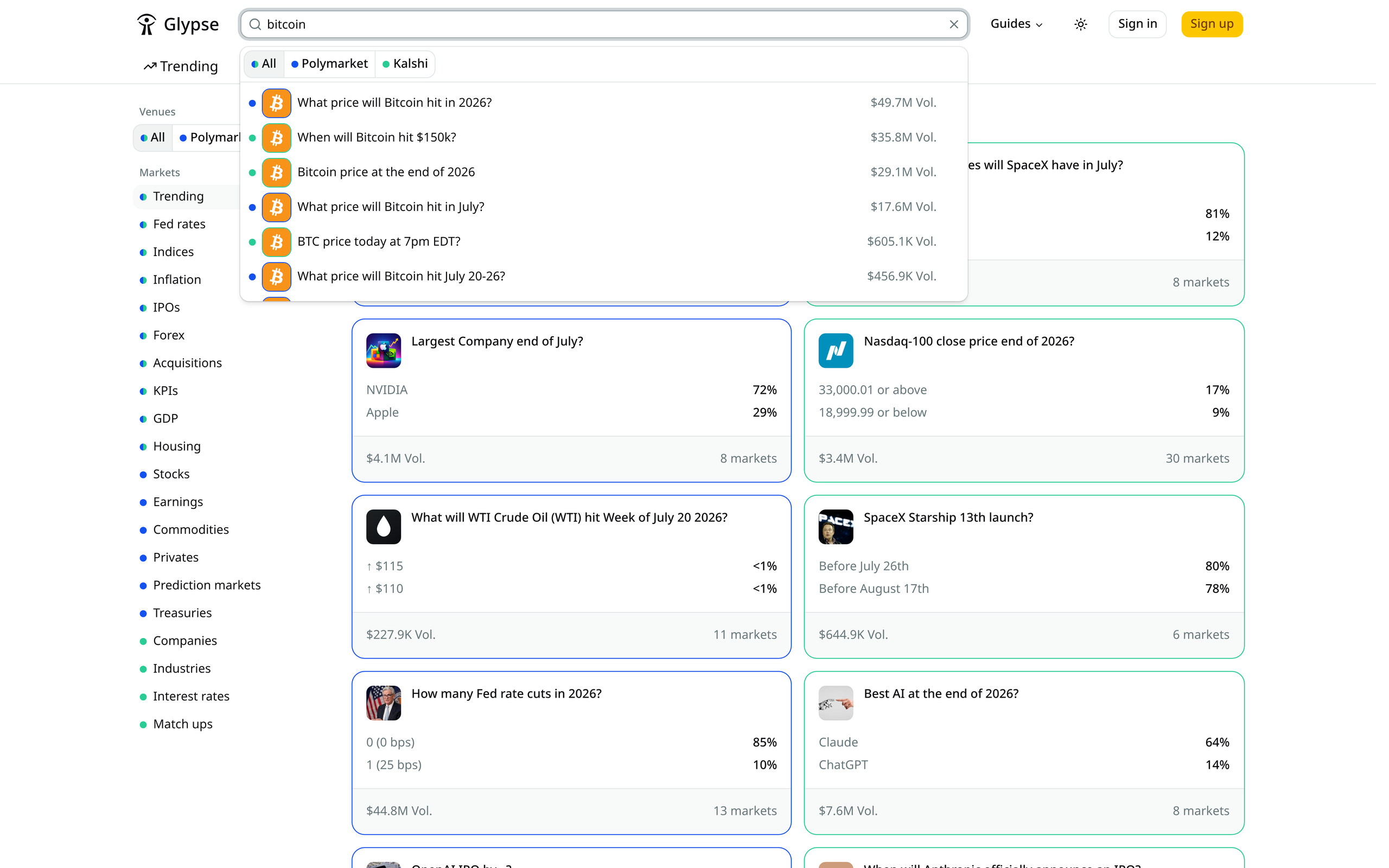
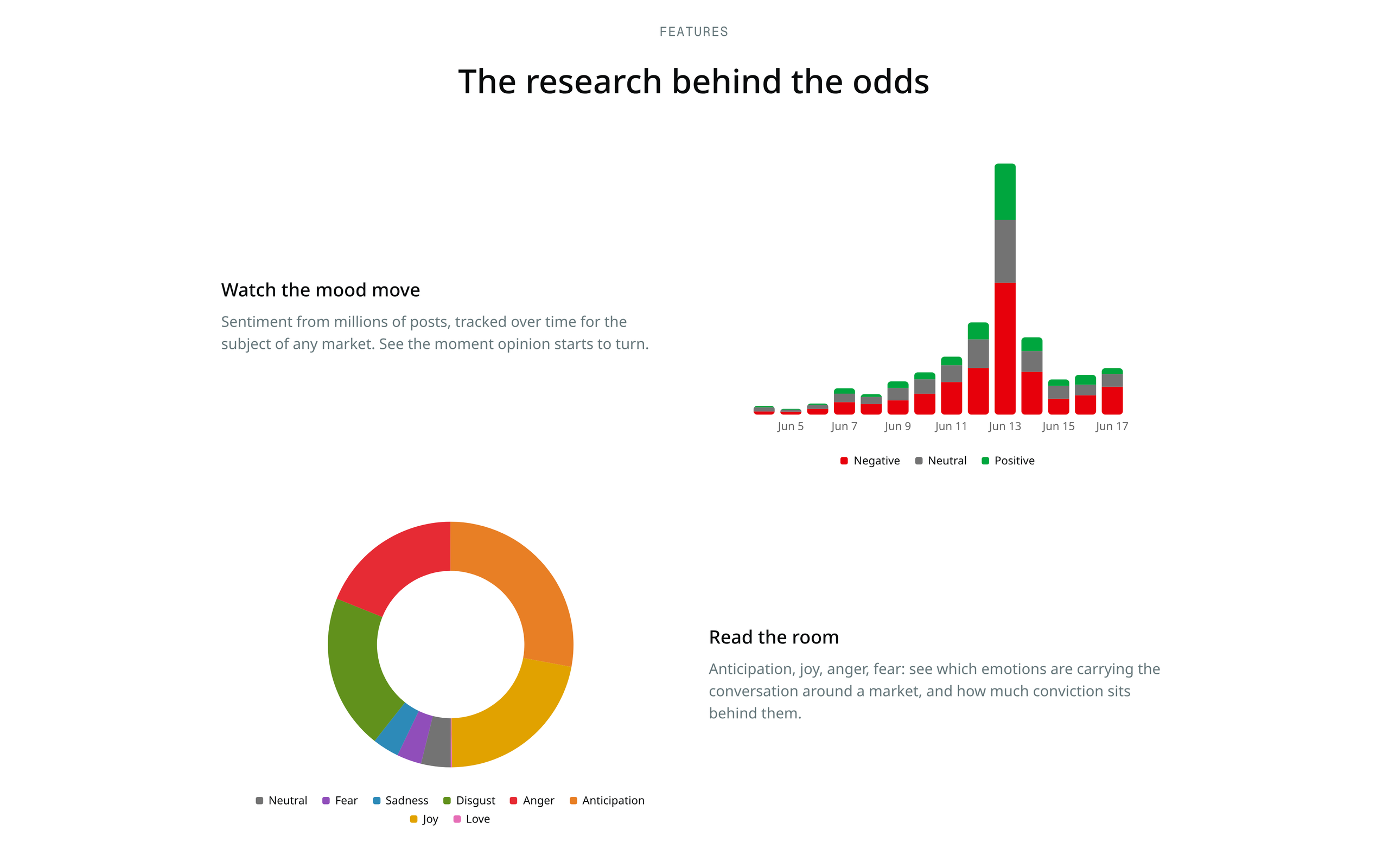
Glypse is an AI research engine for prediction markets. It combines signals from market activity and public conversations so traders can research what is moving, compare contenders, and follow changes in sentiment across Polymarket and Kalshi.
The product had a specific audience and a clear purpose. Its early web footprint was a different story. Glypse publicly described the site as starting at Ahrefs Domain Rating 0. About one month later, it reported reaching DR 17 to 18, seeing initial traffic from directory pages, and spending far less time on repetitive submission work. On September 23, 2026, Ahrefs' public Domain Rating API reported the domain at DR 21.
That does not mean ListingBott single-handedly created every point of growth. DR is a third-party backlink metric, not a Google ranking factor, and a new website can change quickly as different links are discovered. The useful result is more specific: Glypse built an early layer of third-party visibility while its team stayed focused on the product.
A precise product with almost no external footprint
Glypse is not a generic AI assistant or a trading platform. It is a research product built around a specific workflow: understanding the conversation behind a prediction market before deciding what deserves closer attention.
- Find active markets across Polymarket and Kalshi.
- Track sentiment and emotional tone over time.
- Compare candidates, companies, tokens, or other contenders.
- Identify names, tickers, and hashtags gaining attention.
The official site currently reports that its systems have analyzed more than 200 million posts and 530 million data points across more than 28,400 events. Those figures help explain the product's scale, but they do not automatically create discovery outside the Glypse domain.
Someone looking for prediction-market research may search for an AI market-analysis tool, a Polymarket research product, sentiment analysis, or ways to compare changing market narratives. They may browse software directories, startup showcases, AI-tool collections, or research-tool pages before they ever search for Glypse by name.
At DR 0, very few independent pages connected Glypse with those categories. The company had built the product story, but the wider web had barely repeated it.
The bottleneck was repetitive submission work
Directory submissions are rarely technically difficult. The burden comes from repetition. Each platform asks for a different combination of descriptions, categories, screenshots, logos, social links, and pricing details. Someone must assess relevance, adapt the information, complete the form, record the result, and return if approval is delayed.
Glypse described that work plainly in its SaaSHub feedback: doing it manually takes a lot of time. The company used ListingBott so the team would not have to repeat the same process across every platform.
One product intake
Glypse supplied its core product facts, visuals, categories, and links once.
Targets stayed reviewable
The directory list could be checked instead of treated as an uncontrolled bulk blast.
Submissions were paced
The work was distributed across roughly one month rather than pushed through at once.
Communication continued
Progress remained visible while listings moved through submission and approval.
This is the part of a managed directory submission service that is easiest to overlook. The deliverable is not merely a list of websites. It is the execution layer between approved product information and accurate third-party pages.
Four public comments tell one consistent story
Glypse shared feedback on four separate platforms. The wording and early DR reading vary slightly, but the underlying account is consistent: the process saved time, the submissions were gradual, directory traffic began appearing, and DR moved from zero into the high teens in roughly one month.
Automation and a deliberate pace
Glypse reported DR 0 to 18, initial directory traffic, and limited involvement after the initial intake.
Read the public comment ↗A streamlined process that saved time
The review reported the same early DR 18 milestone and described the workflow as efficient.
Read the public review ↗DR 17 and early directory traffic
This snapshot captured DR 17, referral visits beginning to appear, and strong communication.
Read the public review ↗Target choice mattered
Glypse emphasized gradual submissions to directories it selected rather than an uncontrolled blast.
Read the public comment ↗“The process was very streamlined and it saved us quite a bit of time.”
The difference between DR 17 and DR 18 is not a conflict. Ahrefs recalculates DR as its index changes, and the posts were not necessarily written at the same moment. Both describe the same early pattern.
Six live placements from the final report
The final ListingBott campaign report records the pages below as completed Glypse placements. Each URL was checked again during editorial review on September 23, 2026 and returned a live page about Glypse. They are selected examples rather than the complete report.
NEEED Directory
A dedicated product page that explains Glypse as an AI research engine for fast-moving prediction-market information.
View live listingStartup Fame
A startup profile connecting the product name, website, analytics category, and core research function.
View live listingTinyLaunch
A launch page introducing Glypse through a concise promise: AI research for smarter prediction markets.
View live listingWebsite Hunt
A discovery page using the exact category “AI Prediction Market Research” and explaining the Polymarket and Kalshi use case.
View live listingAI Tool For
An AI-tool profile that retains Glypse's prediction-market focus instead of placing it in a vague general category.
View live listingAAT
A detailed page connecting Glypse with artificial intelligence, analytics, finance, sentiment, and contender comparison.
View live listingThe DR timeline is useful, but not the whole result
The cleanest interpretation is a three-stage timeline. It preserves what the public evidence shows without turning one metric into a complete business result.
Little meaningful referring-domain strength detected at the beginning.
Public reviews also reported the first visits from directory pages.
Verified through Ahrefs' public Domain Rating API.
Referral traffic is important here. DR is a modeled metric inside Ahrefs. A real visit from a relevant listing is direct evidence that at least part of the public footprint was being used by people.
The latest DR 21 reading confirms that the early increase did not immediately disappear after the reviews were posted. It still does not establish simple cause and effect. Links may have come from the campaign, launches, editorial mentions, or organic discovery, while DR can move as Ahrefs changes what it has crawled.
The defensible conclusion is that ListingBott contributed to the first meaningful expansion of Glypse's backlink footprint.
What ListingBott can and cannot claim
Case studies become less useful when every positive outcome is assigned to one vendor. Glypse's result is strong enough without stretching the evidence.
Reasonable credit
- Reducing repetitive directory research and submission work.
- Organizing a gradual, reviewable campaign.
- Maintaining communication during the submission period.
- Creating the confirmed public profiles shown in this story.
- Contributing to early referring-domain and referral-traffic signals.
Not claimed
- Sole credit for every point in the move to DR 21.
- Rankings or organic traffic not isolated by source.
- Customer acquisition or revenue Glypse did not report.
- Future DR, rankings, traffic, or AI citations.
- A guaranteed result for another website.
Why the campaign made sense for a specialized AI product
New AI products face a category problem as well as an awareness problem. Broad labels such as “AI tool” are too vague, while narrow labels may not yet have established search demand or mature directories.
Glypse needed third-party pages that connected AI-assisted research, prediction markets, Polymarket and Kalshi, sentiment analysis, market discovery, and a product that does not execute trades. Repeating those relationships across relevant public pages helps people understand the product and gives search engines and AI systems additional sources for identifying it. This does not guarantee inclusion in search results or AI answers.
What other early-stage SaaS teams can learn
Finalize the product facts before scaling submissions
Use one stable product name, URL, category, description, screenshot set, and group of social links. Inconsistent information makes third-party pages harder to maintain and less useful.
Review relevance instead of buying the biggest number
Glypse valued selecting directories and avoiding an uncontrolled blast. A smaller relevant set is easier to verify and more likely to place the product in a meaningful context.
Use a paced campaign when the site is new
A month-long rollout makes work easier to monitor and gives platforms time to review submissions. Its practical value is quality control, follow-up, and clearer reporting.
Measure more than DR
Track referring domains, indexed placements, referral sessions, branded searches, product-page rankings, signups, and assisted conversions. No single metric explains the entire outcome.
Keep building after the distribution layer
Directory pages can establish a young product across the wider web, but they do not replace useful product pages, original research, partnerships, editorial coverage, or customer acquisition.
Build the external footprint without weeks of manual forms
Glypse entered the campaign with a clear product and almost no measured domain strength. About one month later, the company publicly reported DR 17 to 18, early traffic from directory pages, and a process that saved meaningful time. The latest verified Ahrefs reading is DR 21.
The practical win was not a promised ranking or a guaranteed number. It was a stronger third-party footprint created without forcing the Glypse team to manage every directory submission by hand.
Results vary by website, starting point, market, approved targets, and other marketing activity. Ahrefs Domain Rating is a third-party backlink metric, not a Google ranking factor. ListingBott does not guarantee a particular DR, ranking, traffic level, directory approval, AI citation, or number of customers.
